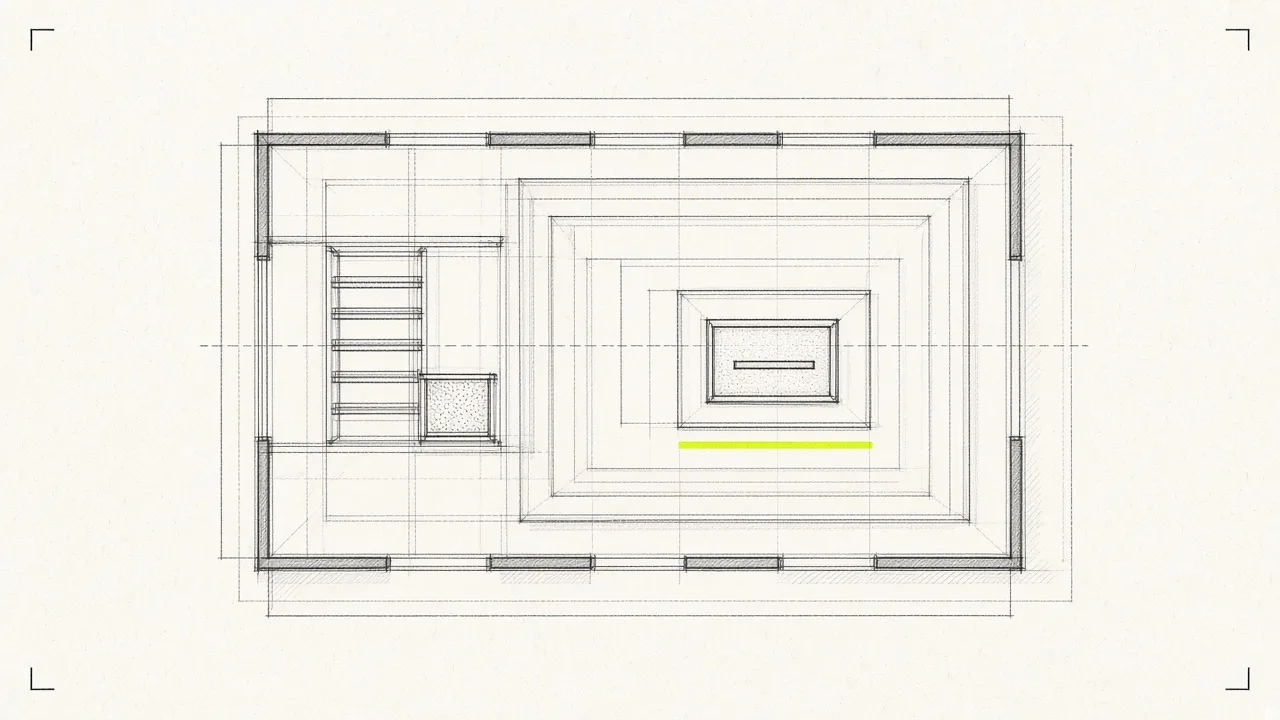
A WMS that only stores “what is here now” is already lying. The truth is the sequence: received, put away, reserved, picked, split, shorted, re-slotted, shipped, returned. Eventoplexy treats that sequence as the primary object. Locations, pallets, consignments and orders are just the shapes those events take when they nest.
The warehouse as nested events
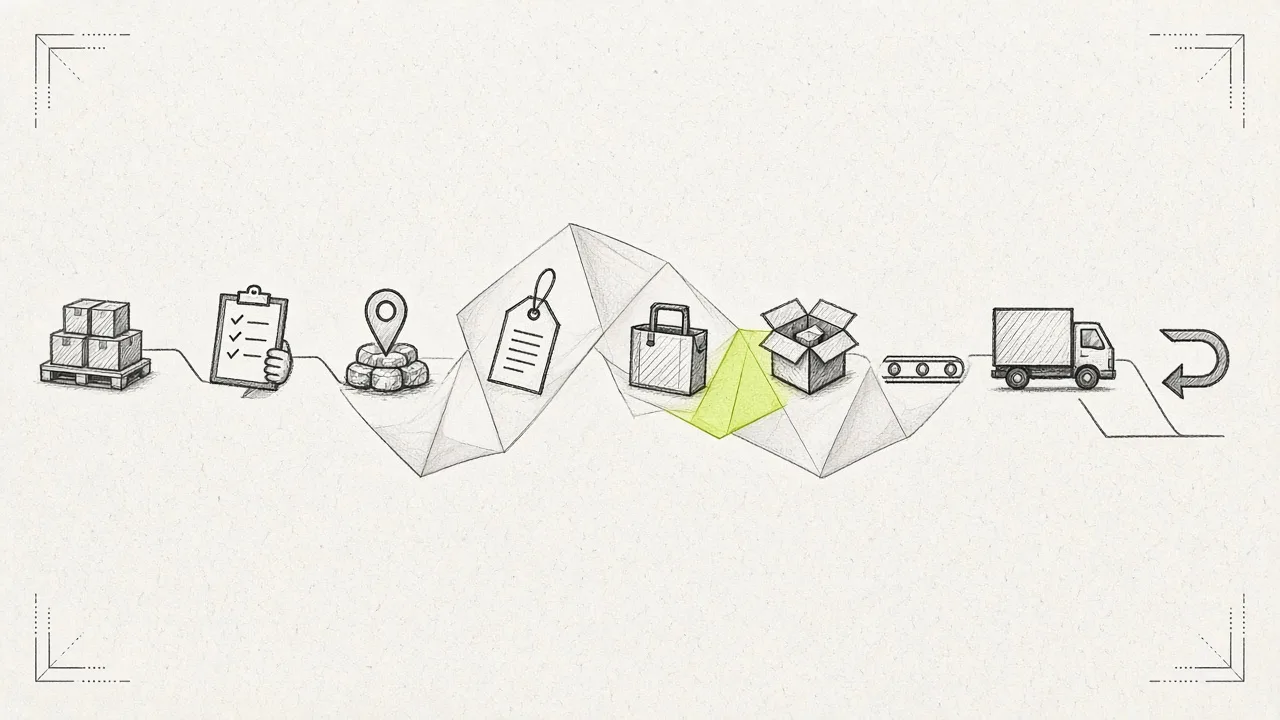
In eventoplexy, nothing sits still. A case is not a row in a table. It is a history:
- inbound scan
- QA hold
- putaway into a nested location (bay → rack → shelf → bin)
- allocation to an order
- pick confirmation
- pack into a carton
- carton into a consignment
- consignment onto a vehicle
Each of those is an event. Each event contains previous events. That nesting is the whole point. A short-dated pallet is not “50 units in A-12”. It is 50 units whose remaining life is a function of every movement, every temperature exception, every split that happened after goods-in.
A conventional WMS flattens that into current state and hopes the audit trail is good enough. Eventoplexy keeps the fold intact, so you can replay why a pick face is wrong at 3am without reconstructing it from scraps.
Why this matters operationally
Stock that can lie to you. Short-dated wholesale is unforgiving. If two events land out of order — a pick before a putaway confirmation, a return before the original dispatch is closed — current-state systems invent stock that never existed, or hide stock that did. Eventoplexy resolves by causality, not by last-write-wins.
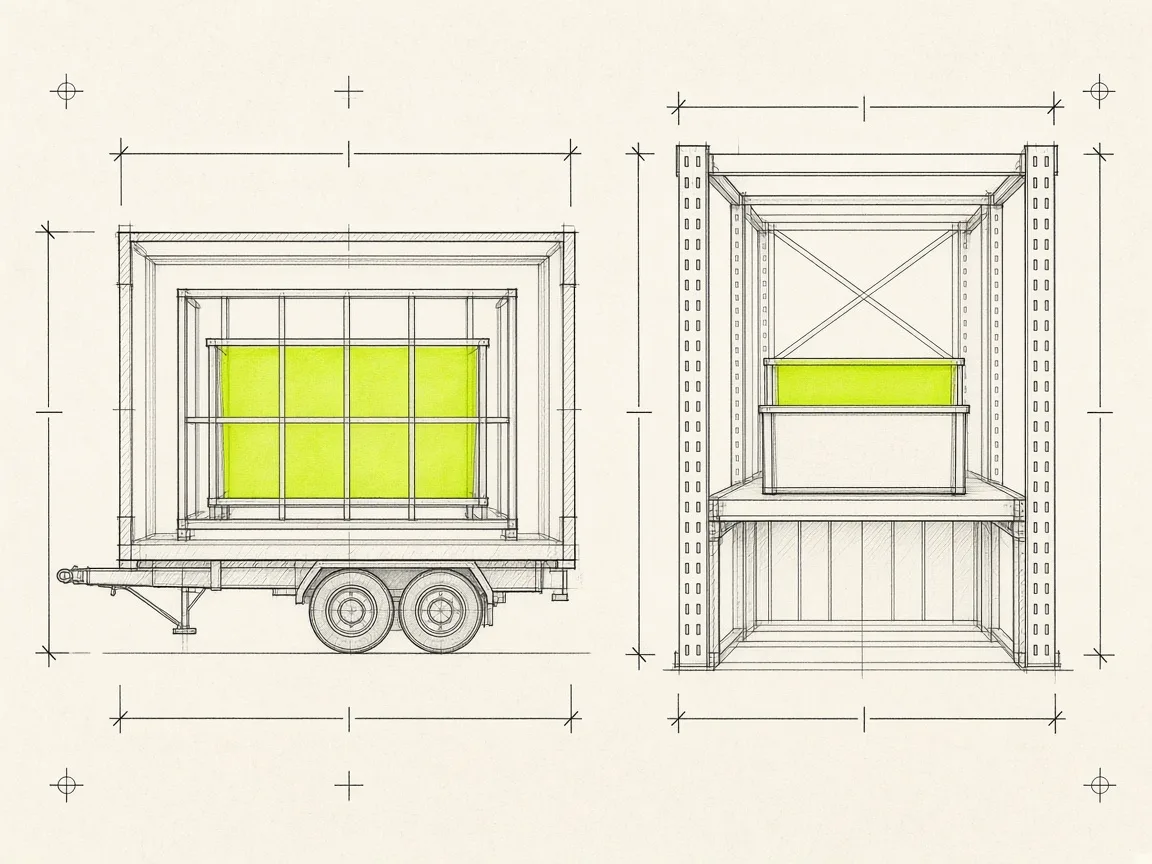
Locations that are not points. A warehouse is not a list of bins. It is containment. A tote inside a cage on a trailer still “in the building” is a different physical truth from a tote on a pick face. Eventoplexy models location as a nest that events push items through, not as a single foreign key that gets overwritten.
Orders as projections. An order is not a document. It is a projection over allocation, pick, pack and ship events. When a line shorts, you do not “update the order”. You emit a shortage event and let every dependent shape — invoice, label, carrier booking, customer message — rebuild from the new fold.
Exceptions as first-class events. Damages, date holds, mis-picks and carrier failures are not notes in a comments field. They are events that change what later events are allowed to do. That is how you stop a held batch being packed because someone worked from a stale screen.
The practical design
An eventoplexic WMS is built around three rules:
- Append, don’t overwrite. State is derived. If two operators disagree, the log still knows both actions and the order they happened.
- Nest, don’t flatten. Shipments contain consignments contain cartons contain lines contain units. Locations contain locations. Events can address any layer without collapsing the others.
- Replay is the test. If you cannot rebuild today’s pick face from the event log alone, you do not have a system. You have a spreadsheet with extra steps.
Rules engines sit on top of that log: “do not allocate if remaining life is under X after the next carrier cutoff”, “do not nest this allergen into that cage”, “re-slot if the pick face drops below velocity”. The rules fire on events, not on nightly jobs.
What it feels like on the floor
Goods-in becomes the first fold, not a data entry step. A scanner does not “set location”. It records that this unit entered this nest at this time, under this user, with this date code.
Picking becomes a claim on a future event, not a decrement. If the claim fails, the failure is itself an event, and the next best nest is proposed immediately.
Dispatch is not a status change to SHIPPED. It is the moment a consignment event closes a set of pack events and opens a transport event. Tracking is just the next layer of the same fold.
The point
Eventoplexy, from a WMS point of view, is the refusal to treat the warehouse as a pile of quantities. It is the discipline of keeping every movement, containment and exception as a structured event, nested so the system can still tell the truth after the building has had a bad afternoon.
Current stock is a view. The warehouse is the fold.